
Glass Filled PTFE Rods
Goa Polymer manufactures Glass-Filled PTFE in rod, sheet, tube, and custom-machined forms from our ISO 9001:2015 certified facility in Maharashtra, India. With 15–25% glass fibre content, this grade significantly reduces creep (cold flow) and increases compressive strength compared to virgin PTFE — while retaining PTFE’s broad chemical resistance and –200°C to +260°C service range. It is the standard choice for PTFE valve seats, flange gaskets, pump components, and precision seals where virgin PTFE deforms under sustained load.


15% or 25% (by weight)
10 mm – 200 mm
10 mm – 150 mm
1 mm – 50 mm
40 – 60 MPa (vs 10–15 MPa virgin)
ISO 9001:2015 | MSME Registered
Glass-Filled PTFE is produced by blending chopped glass fibres (15% or 25% by weight) into a PTFE matrix before compression moulding and sintering. The glass fibres act as a rigid reinforcing skeleton within the soft PTFE, resisting deformation under compressive load while the PTFE binder provides the sealing surface, chemical inertness, and low friction.
The primary engineering problem Glass-Filled PTFE solves is creep — the tendency of virgin PTFE to slowly deform and flow away from a compressed surface over time. In a bolted flange, creep causes the gasket to thin and leak. In a valve seat, it causes the seat to extrude under the ball and fail to seal. In a bearing, it causes bore expansion and shaft slippage. Glass fibre reinforcement reduces creep by up to 70% compared to virgin PTFE, making components retain their geometry and sealing performance far longer in service.

Glass fibres physically restrict cold flow under sustained bolt load or bearing pressure. Flanges stay sealed, valve seats hold their bore dimensions, and bearings maintain their press-fit — all significantly longer than with virgin PTFE.

Compressive strength of 40–60 MPa versus 10–15 MPa for virgin PTFE. Handles the flange bolt loads of Class 300 and Class 600 flanges, and the seating forces of high-pressure ball valves, without permanent deformation.

Glass fibre is chemically inert against most industrial acids, bases, and solvents. Glass-Filled PTFE resists H₂SO₄, HCl, HNO₃, caustic soda, and most organic solvents — suitable for chemical process plant applications where virgin PTFE creep causes problems.

Glass fibre does not reduce the service temperature range. Components operate across the full PTFE thermal range — from cryogenic liquid nitrogen service to high-temperature chemical reactors and steam systems.

Lower coefficient of thermal expansion than virgin PTFE. Seals, valve seats, and bearing components maintain tighter dimensional tolerances across thermal cycles — reducing the risk of leakage after heat-up and cool-down.

Glass-Filled PTFE machines well on CNC lathes and mills, producing clean surfaces without burring. Tolerances of ±0.05 mm are achievable for precision valve seats and bearing bores from rod or tube stock.

| Property | 15% Glass | 25% Glass | Test Standard |
|---|---|---|---|
| Tensile Strength | 20 – 25 MPa | 17 – 22 MPa | ASTM D638 |
| Compressive Strength | 40 – 50 MPa | 50 – 60 MPa | ASTM D695 |
| Elongation at Break | 200-280% | 150 – 220 % | ASTM D638 |
| Hardness (Shore D) | 60 – 65 | 63 – 68 | ASTM D2240 |
| Density | 2.20 – 2.30 g/cm³ | 2.28 – 2.38 g/cm³ | ASTM D792 |
| Coefficient of Friction | 18 – 25 MPa | 20 – 28 MPa | ASTM D790 |
| Property | Value | Test Standard | Notes |
|---|---|---|---|
| Continuous Service Temperature | –200°C to +260°C | – | ePTFE grade: –268°C to +260°C |
| Short-Term Max Temperature | +300°C | – | Brief excursion without blowout |
| Thermal Conductivity | 0.25 – 0.69 W/m·K | ASTM C177 | Varies by filler content |
| Property | Value | Test Standard | Notes |
|---|---|---|---|
| Dielectric Strength | 18 – 20 kV/mm | ASTM D149 | Electrically insulating |
| Tensile Strength | 10¹⁷ Ω·cm | ASTM D257 | Near-perfect non-conductor (virgin grade) |
| Media | Resistance | Notes |
|---|---|---|
| Sulphuric acid (H₂SO₄), HCl, HNO₃ | Good | Resists most concentrations; verify at elevated temperature |
| Caustic soda (NaOH), alkalis | Good | Glass fibre resistant at moderate concentration and temperature |
| Most organic solvents | Good | Acetone, MEK, toluene, chlorinated solvents |
| Steam (up to 260°C) | Good | Primary advantage over virgin PTFE — better creep under steam pressure |
| Hydrofluoric acid (HF) | Not suitable | HF attacks glass fibre — use virgin PTFE for HF service |
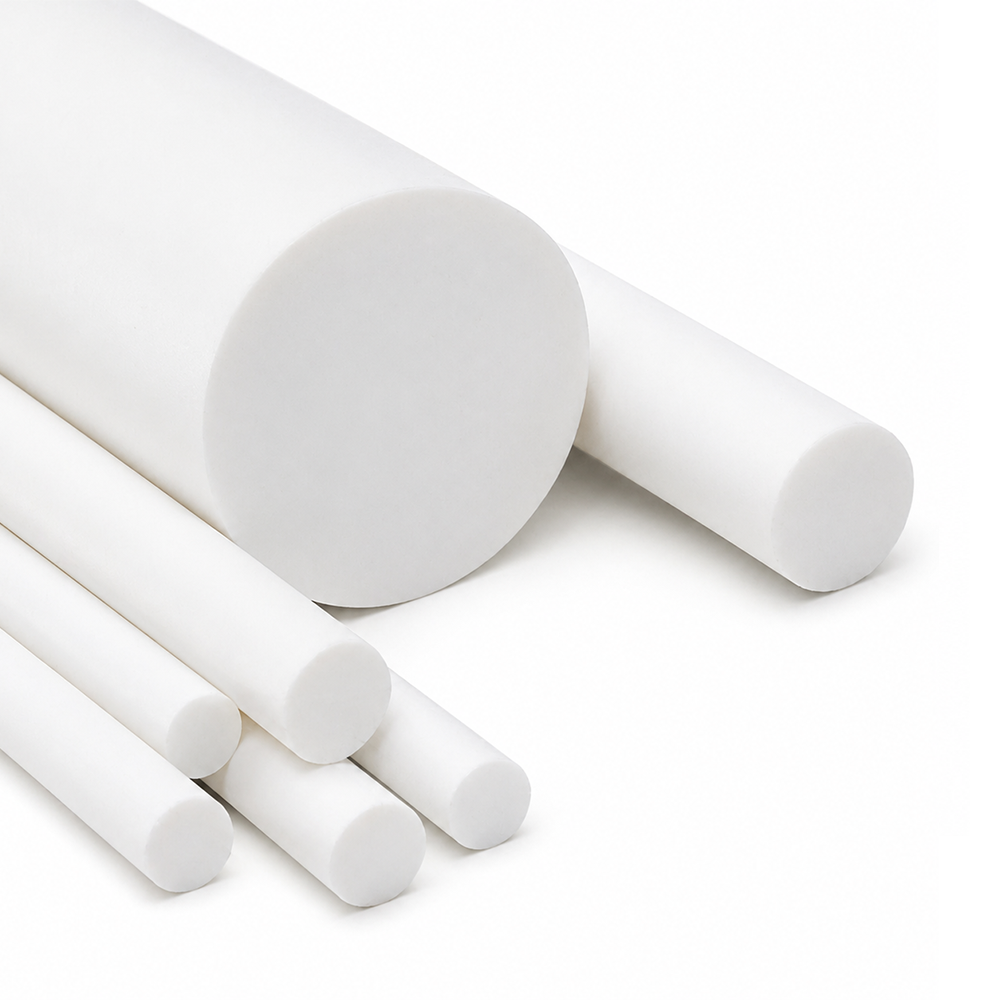
Glass-Filled PTFE is supplied as standard stock shapes for in-house machining or as finished components to your drawing. Both 15% and 25% glass grades are available in all forms.
For machining bushings, valve seats & bearings
100% unmodified PTFE. Preferred wherever media purity matters — food processing, pharmaceutical, and highly aggressive chemical service.
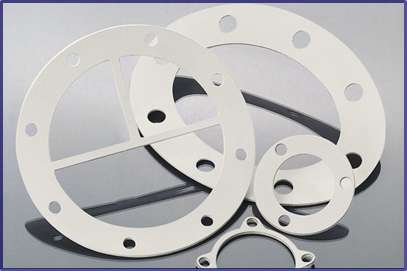
For gaskets, wear plates & flat seals
15–25% carbon/graphite filler. Significantly improves compressive strength and wear resistance — critical for high-cycle valves and high-pressure services.
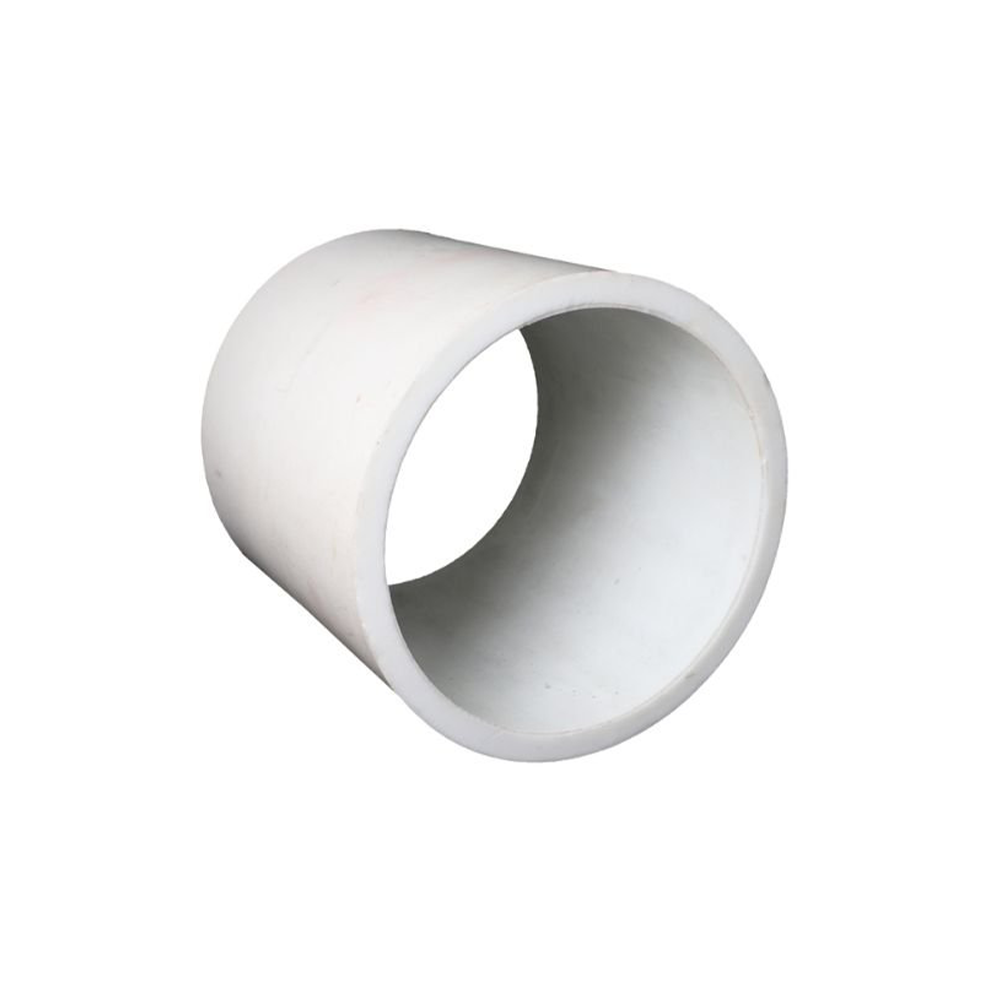
For sleeve bearings & thick-wall bushings
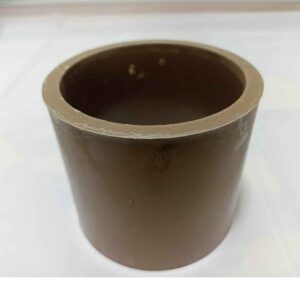
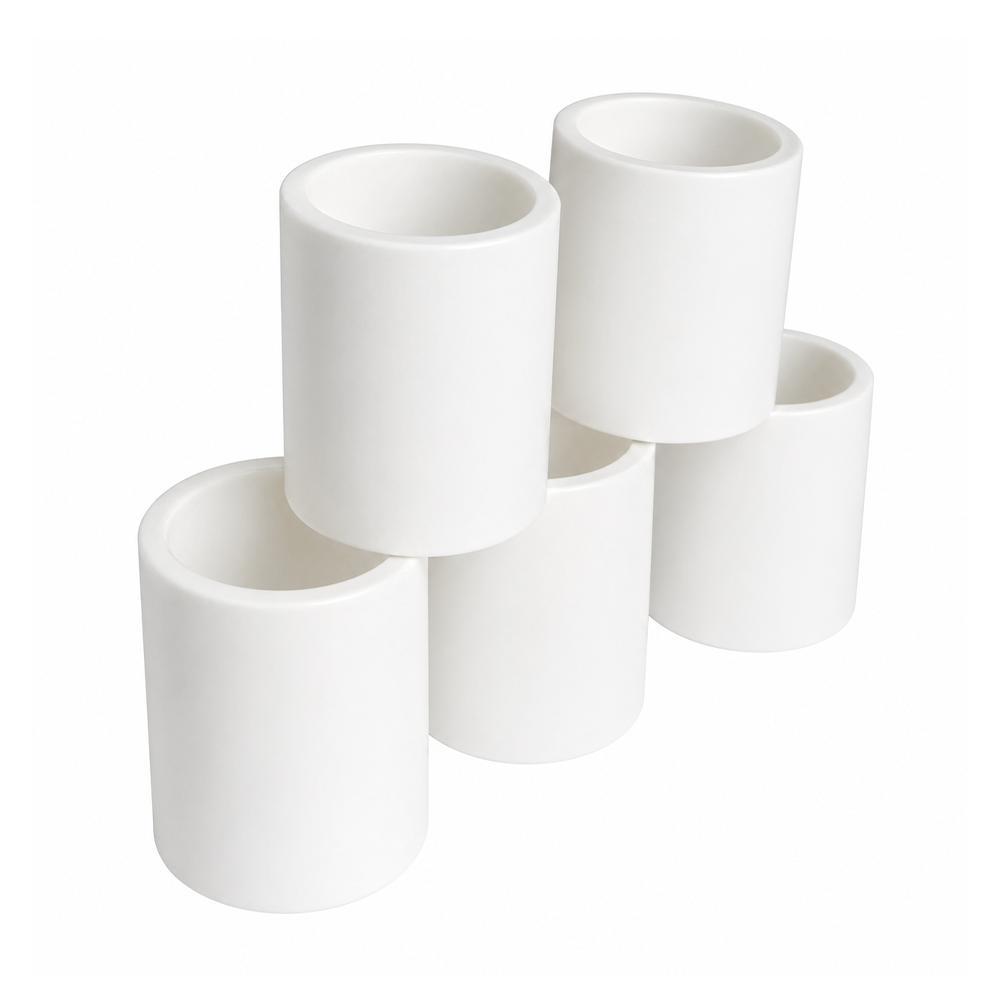
Pre-bored tube reduces machining time for sleeve bearing production. Suitable for pump body bearing housings, agitator shaft guides, and any application requiring a cylindrical bearing surface.
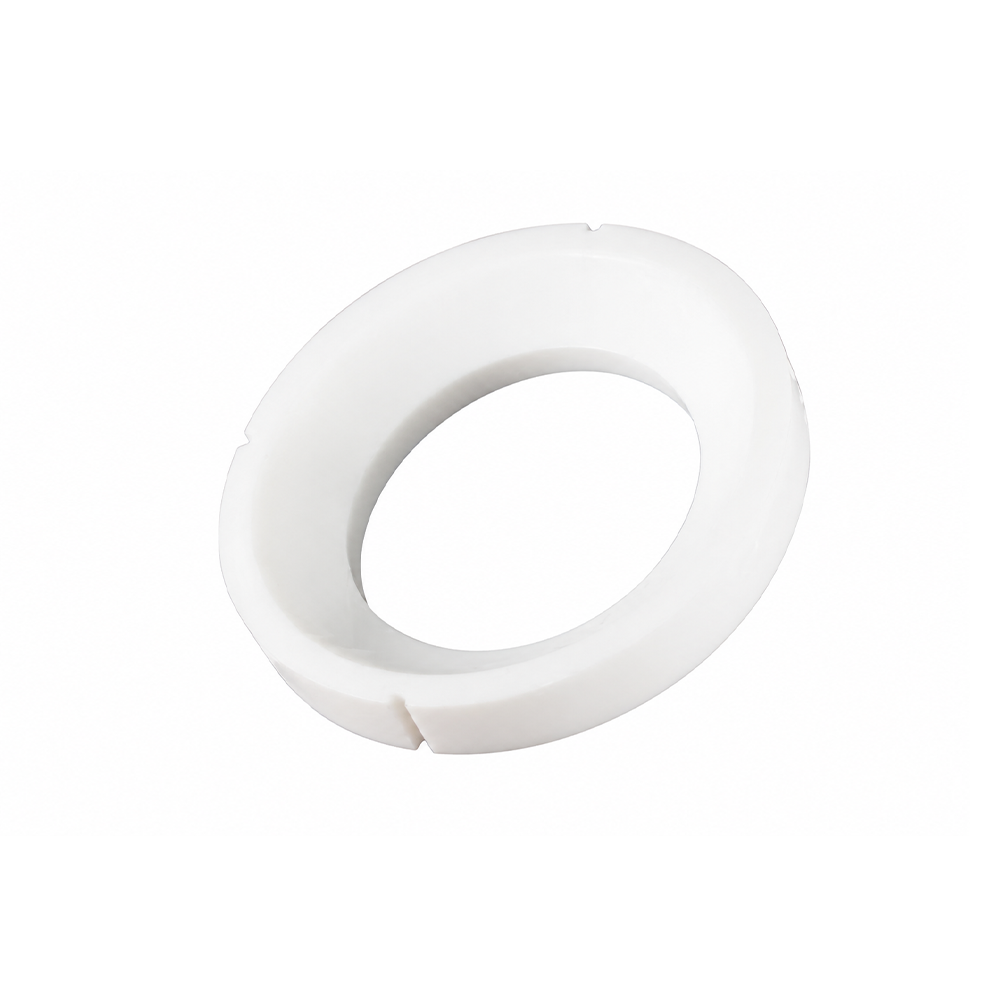
Valve seats, flanges, gaskets & seals to drawing
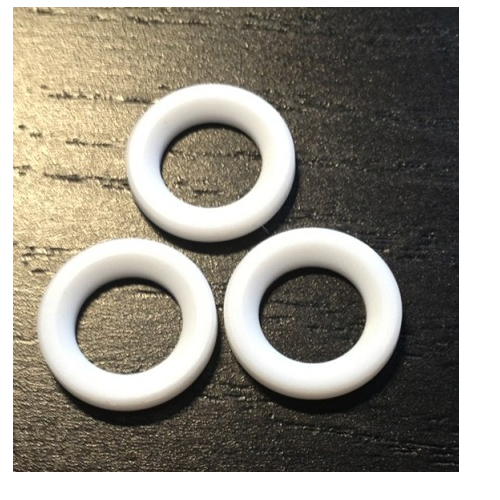
Ready-to-fit components machined to your drawing. Common forms: ball valve seats, plug valve seats, guide bushings, flange gaskets, piston rod seals, and wear rings. Supplied with dimensional inspection record.
millimetres
millimetres
mm standard | tighter on request
⚙️Custom sizes and finished parts: Non-standard diameters, oversized sheets, and complex machined profiles are available on order. Send your drawing or dimensions via our contact form for a quote and lead time.
Glass-Filled PTFE is specified wherever virgin PTFE’s creep behaviour causes premature failure — typically in bolted flanges, valve seats, and precision sealing components under sustained compressive load.

Flange gaskets on acid and solvent piping at Class 150–600. Valve seats in ball and plug valves on corrosive media lines. The 25% glass grade holds its dimensions under sustained bolt load in hot acid service.

Steam line flange gaskets, boiler feed water valve seats, and condenser tubesheet seals. Glass fibre reinforcement resists steam pressure and thermal cycling that causes virgin PTFE gaskets to blow out.

Pipeline ball valve seats, gate valve seats, and flanged joint gaskets. Glass-filled grade handles sustained pressure in Class 300 and Class 600 pipeline valves without seat extrusion.

Guide bushings, piston rod seals, and wear rings in pumps, compressors, and process equipment. Lower creep vs virgin PTFE extends the service interval between bushing replacements.

Valve seats and flange gaskets on chlorine dosing, ozone generation, and coagulant feed systems. Chemical resistance covers all standard water treatment chemicals.

Precision guide bushings and low-friction slides in wafer handling and etching equipment. Chemical resistance covers the acid and solvent streams used in semiconductor fabrication.

Control surface bearing bushings and fluid system seals. Operates across the full –200°C to +260°C range without embrittlement. Lighter than metal bearing inserts.

Pump body wear rings and agitator shaft bushings in non-food-contact positions. Note: glass-filled PTFE is not FDA-approved for direct food or drug contact — use virgin PTFE for those surfaces.

Bridge and building expansion bearing pads and slide plates. The reduced creep of glass-filled PTFE maintains the design clearance under sustained structural loads over decades of service.

This table compares the four main PTFE grades across the properties that determine which grade to select for a given application.
| Property | Glass-Filled ✓ | Bronze-Filled | Carbon-Filled | Virgin PTFE |
|---|---|---|---|---|
| Creep resistance | ● 50–70% reduction | ● Good | ● Good | ● High creep — poor |
| Compressive strength | 40 – 60 MPa | 80 – 150 MPa (highest) | 35 – 55 MPa | 10 – 15 MPa |
| Chemical resistance | ● Good (most acids & bases) | ● Limited (no acids) | ● Good (non-oxidising) | ● Excellent (all chemicals) |
| Service temperature | –200°C to +260°C | –180°C to +240°C | –200°C to +260°C | –200°C to +260°C |
| FDA / food safe | ✕ No | ✕ No | ✕ No | ● Yes |
| Anti-static / electrically conductive | ✕ No — insulator | ✕ No | ● Yes — semi-conductive | ✕ No — insulator |
| HF acid resistance | ✕ No — glass attacked | ✕ No | ● Yes | ● Yes |
| Best suited for | Valve seats, flanges, seals in chemical & steam service | High-load bearings, hydraulic seals, thrust washers | Anti-static valves, oil & gas, high-cycle parts | Food, pharma, HF service, electrical insulation |
Virgin PTFE is a very soft polymer with a low compressive modulus. Under sustained load — such as a tightened flange bolt or a closed valve — the material slowly flows away from the compressed zone. Over weeks or months, this reduces the sealing stress until leakage begins. Glass fibres are rigid filaments that cannot flow. Blended into the PTFE matrix, they form a mechanical framework that physically restricts this cold flow. The 25% glass grade reduces creep deformation by approximately 70% compared to virgin PTFE under the same load and temperature conditions.
Yes. The 25% glass grade is rated up to PN 63 (Class 300) for standard flange gasket applications. Its higher compressive strength (50–60 MPa) and reduced creep make it significantly more reliable than virgin PTFE gaskets in Class 300 and Class 600 flanges, especially at elevated temperatures where creep accelerates. For pressures above PN 63, contact our team — we can confirm suitability based on your specific gasket dimensions and operating conditions.
It depends on the media and valve duty. Glass-Filled PTFE is the better choice for chemical service (acids, bases, solvents) where the media would corrode carbon filler or bronze filler — the glass fibre is chemically inert in most process chemicals. Carbon-Filled PTFE is preferred in oil and gas service where anti-static properties prevent electrostatic ignition risk with flammable media, and in high-cycle control valves where the carbon filler gives better abrasion resistance. If in doubt, share your valve data sheet and media list with us for a recommendation.
No. Glass-Filled PTFE is not FDA-approved for direct contact with food or pharmaceutical products. Only virgin PTFE carries the FDA 21 CFR 177.1550 compliance needed for food-contact surfaces. Glass-Filled PTFE can be used in non-contact positions in food machinery — guide bushings, bearing housings, drive components — where there is no risk of contact with the food product or process fluid.
15% glass provides moderate creep improvement (~50% reduction vs virgin) with better retained chemical resistance — the right choice for mild to moderate chemical service where some improvement in dimensional stability is needed. 25% glass gives maximum creep resistance (~70% reduction), higher compressive strength (50–60 MPa vs 40–50 MPa), and better dimensional stability under high bolt loads — recommended for high-pressure flanges (Class 300 and above), steam valve seats, and structural bearing applications. The 25% grade has slightly lower chemical resistance than the 15% grade, particularly against concentrated alkalis at elevated temperature.
Yes. Glass-Filled PTFE rod is the most common stock form we supply for valve seat machining. Diameters from 10 mm to 150 mm are held in stock in both 15% and 25% glass grades. The material machines cleanly on a CNC lathe — the glass fibres give better surface finish than virgin PTFE on turned bore surfaces. If you need finished valve seats machined to your valve OEM drawing, we can supply those directly. Share your drawing or valve model number for a quote.
Standard rod and sheet sizes in both glass grades are held in stock at our Maharashtra facility and dispatched within 3–7 working days across India. Custom-machined finished components and non-standard dimensions typically require 7–14 working days depending on complexity and quantity. Export orders to the Middle East, Southeast Asia, and other regions are handled — contact us for export lead times.
100%
ISO 9001:2015
Quality Assurance

15% and 25% glass grades in rod, sheet, and tube — sintered and stocked at our Maharashtra facility. Dispatched in 3–7 working days for standard sizes.

Finished valve seats, bushings, gaskets, and seals machined to your OEM or engineering drawing. Dimensional inspection record supplied with finished parts.

Full traceability from glass content verification at incoming inspection through to finished part dimension records. Material test certificates on request for every batch.

Not sure whether 15% or 25% glass suits your operating pressure, temperature, and media? Share your process conditions and we will confirm the correct grade before you order.

Glass, carbon, and bronze-filled PTFE all produced under one roof. If your application requires different grades for different components in the same assembly, single-source supply from Goa Polymer simplifies procurement.
Goa Polymer is MSME-registered and ISO 9001:2015 certified — your assurance of consistent glass content, dimensional accuracy, and material traceability across every batch of Glass-Filled PTFE rods, sheets, tubes, and machined components supplied from Maharashtra, India.
Get a competitive quote from Goa Polymer — ISO 9001:2015 certified Glass-Filled PTFE manufacturer in Maharashtra, India. 15% and 25% glass grades in stock. Standard rods & sheets or finished components machined to your drawing. PAN-India delivery in 3–7 working days.
Quick Links
Contact us
Address
© Copyright 2026 by Goa Polymer