
PTFE gaskets play a critical role in modern industrial sealing applications where chemical resistance, temperature stability, and leak prevention are essential. Known for their exceptional durability and non-reactive nature, PTFE gasket materials are widely used in demanding environments such as chemical processing, oil and gas, food manufacturing, and pharmaceuticals. Their ability to withstand aggressive chemicals, extreme temperatures, and high pressures makes them a preferred sealing solution across industries.
In this article, we explore the key properties, industrial applications, types, and advantages of PTFE gaskets, helping you understand why they are considered one of the most reliable sealing materials available today.
Key Properties of PTFE Gasket Material
Understanding the properties of PTFE helps explain its wide range of applications.
1. Excellent Chemical Resistance
PTFE is impervious to nearly all chemicals, among them:
- Strong acids
- Alkalis
- Solvents
- Corrosive fluids
This is why PTFE gaskets are perfect for chemical processing
2. High Temperature Resistance
The temperature range to which PTFE seals can be exposed is between -200°C and +260°C. This broad temperature range makes them appropriate for harsh working environments.
3. Non-Stick Surface
The friction factor of PTFE is very low. It is not very adherent to other surfaces (installation and elimination facilities).
4. Non-Reactive and Non-Toxic
PTFE is suitable for use in the food and pharmaceutical industries, where it is often required to come into contact with substances, as it is non-reactive and, in many cases, FDA approved.
5. Moisture-proof sealingperformance
PTFE gaskets forsealing even uneven flange surfaces.
Main Uses of PTFE Gasket in Different Industries
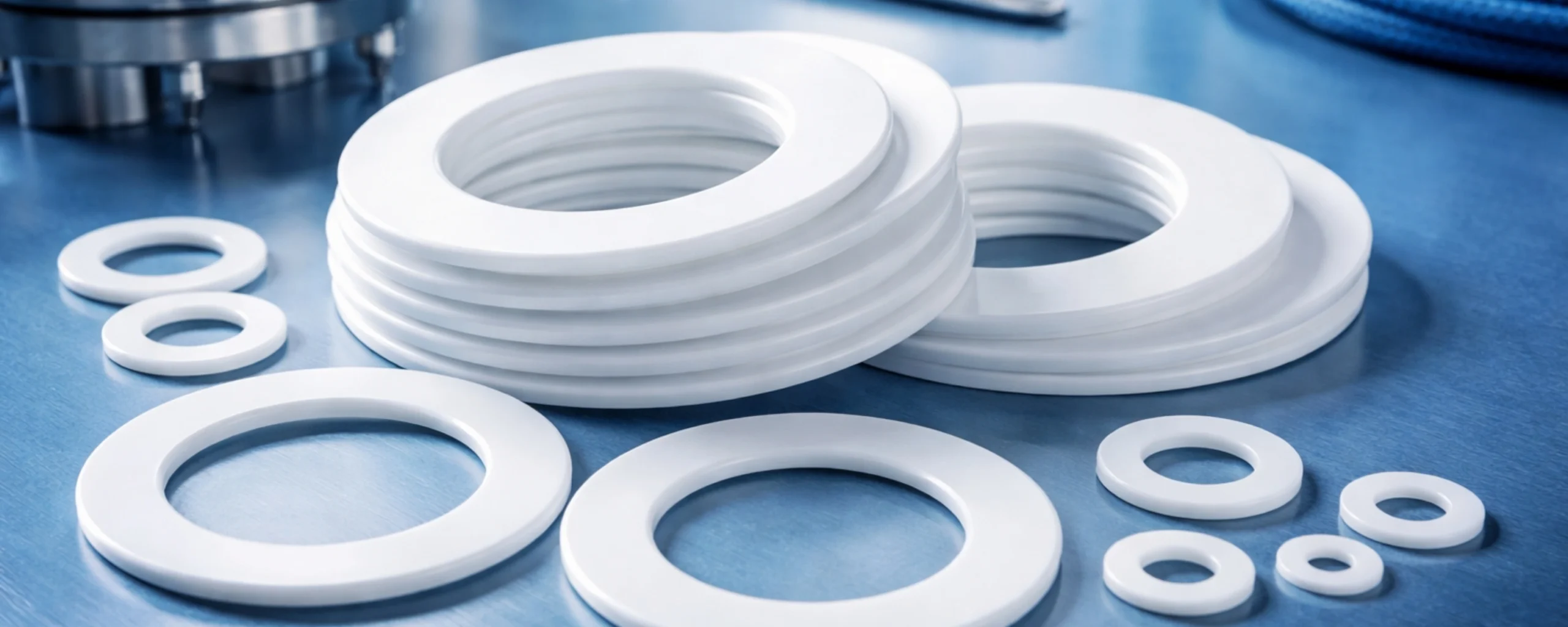
Now let’s look at the major uses of PTFE gaskets across industries.
1. Chemical Processing Industry
A major application of PTFE gaskets is in thechemical industry.
Chemical plantsprocess:
- Strong acids like sulfuricacid
- Causticsoda
- Corrosivesolvents
- Reactivechemicals
Normal rubber or metal gaskets can blowout in these. However, PTFE gaskets are chemically much more resistant and willlast for a very long time.
Common applications include:
- Pipe flanges
- Valves
- Reactors
- Pumps
- Storage tanks
2. Oil and Gas Industry
In the oil and gas sector, sealing performance is extremely important. Even small leaks can cause serious safety hazards.
PTFE gaskets are used in:
- Refineries
- Offshore platforms
- Gas pipelines
- Petrochemical plants
They help seal:
- Hydrocarbons
- Petroleum products
- High-pressure gas systems
Their ability to withstand extreme temperature and pressure makes them a preferred choice.
3. Food and Beverage Industry
The food industry requires materials that are:
- Non-toxic
- Non-contaminating
- Easy to clean
PTFE gasket material meets these requirements perfectly.
Uses in food processing:
- Dairy processing plants
- Beverage bottling units
- Edible oil production
- Bakery machinery
PTFE gaskets prevent contamination and maintain hygiene standards.
4. Pharmaceutical Industry
In pharmaceutical manufacturing, hygiene and chemical resistance are critical.
PTFE gaskets are used in:
- Drug manufacturing units
- Bioreactors
- Sterile processing equipment
- Fluid transfer systems
Since PTFE does not react with chemicals, it ensures product purity and safety.
5. Water Treatment Plants
Water treatment facilities deal with chemicals like chlorine and other corrosive agents.
PTFE gaskets are used in:
- Pumps
- Valves
- Filtration systems
- Pipeline flanges
They provide reliable sealing and resist corrosion in wet environments.
6. Power Generation Industry
Power plants operate under high temperatures and pressures.
PTFE gaskets are used in:
- Steam lines
- Heat exchangers
- Boilers
- Turbines
Their thermal stability and resistance to harsh conditions make them ideal for power applications.
7. Marine Industry
In marine environments, exposure to saltwater and humidity can cause corrosion.
PTFE gaskets are used in:
- Ship engine systems
- Fuel lines
- Cooling systems
- Hydraulic systems
They provide corrosion resistance and long-term durability.
Types of PTFE Gaskets
There are different types of PTFE gaskets available depending on application needs.
1. Virgin PTFE Gaskets

Made from pure PTFE resin. Best for chemical resistance and food-grade applications.
2. Filled PTFE Gaskets
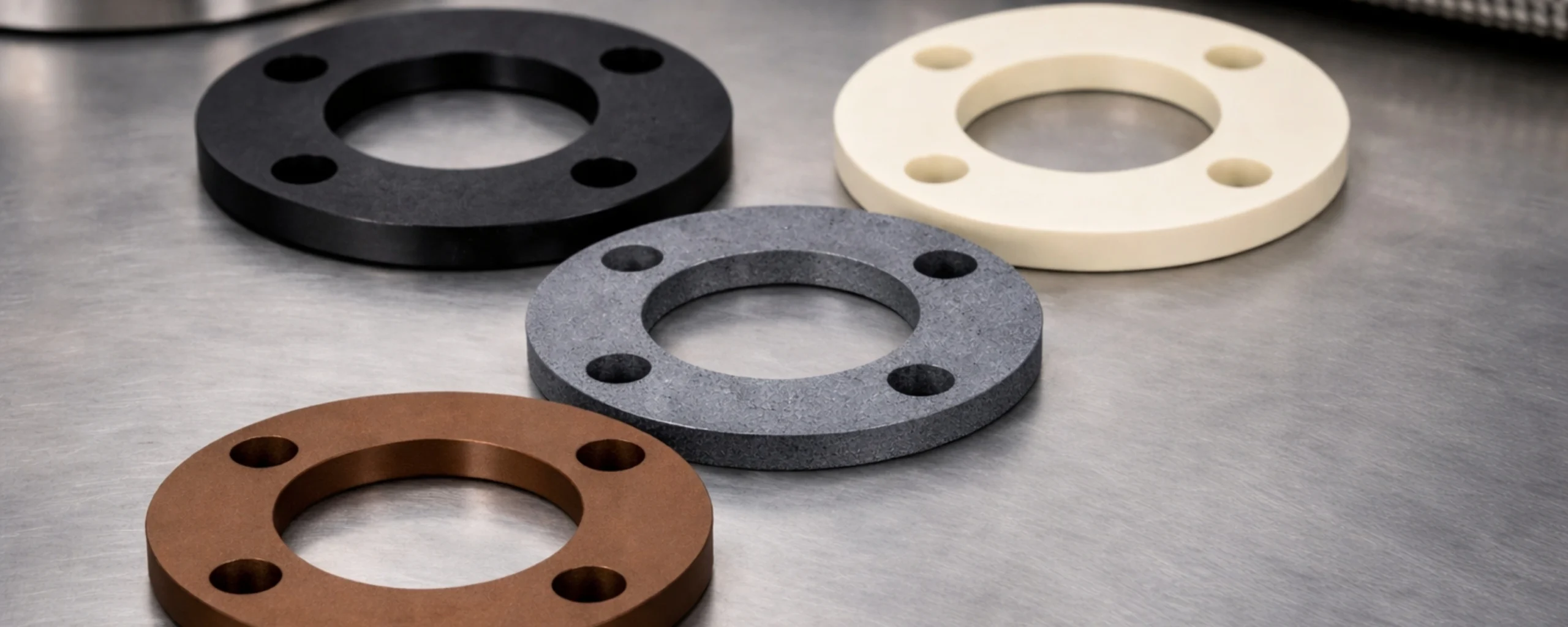
Mixed with materials like:
- Glass fiber
- Carbon
- Graphite
- Bronze
These fillers improve:
- Strength
- Wear resistance
- Pressure handling capacity
3. Expanded PTFE Gaskets (ePTFE)
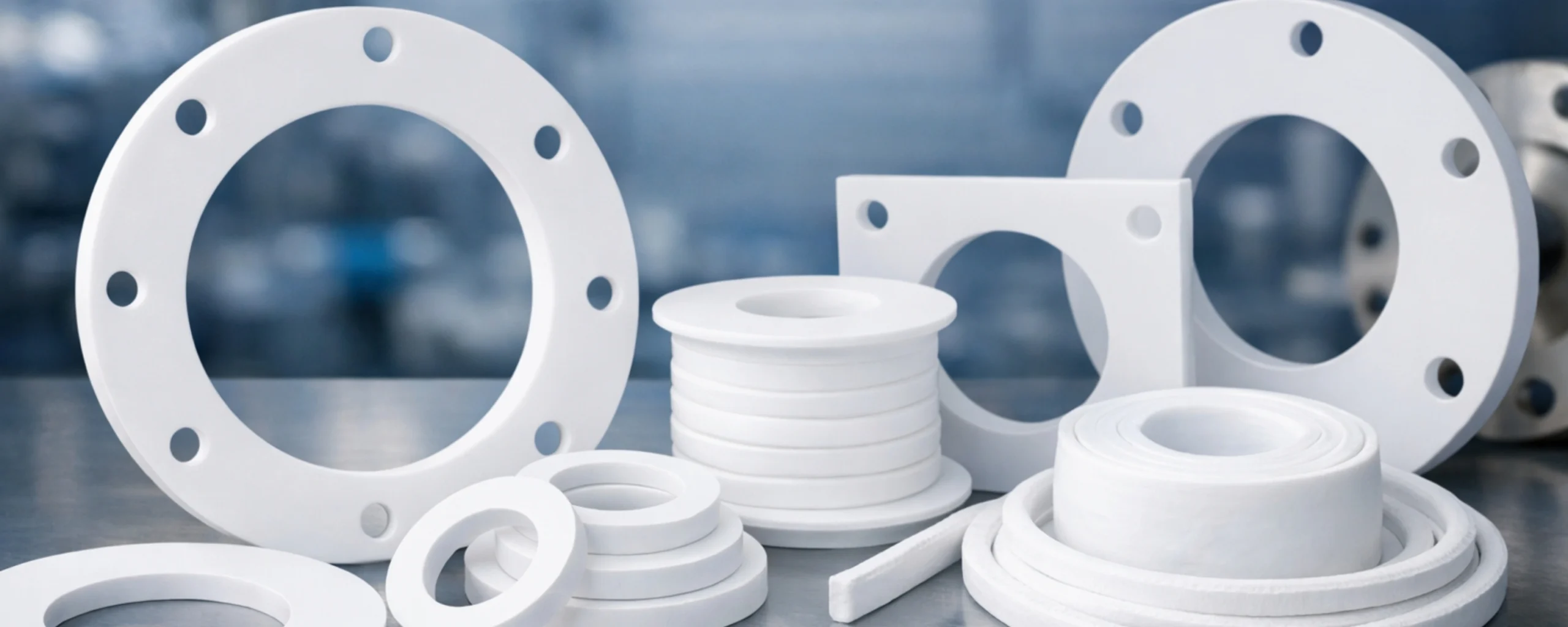
Expanded PTFE has a softer structure and excellent flexibility.
Benefits:
- Better adaptability to uneven flange surfaces
- Improved sealing performance
- Ideal for low bolt load applications
4. PTFE Envelope Gaskets
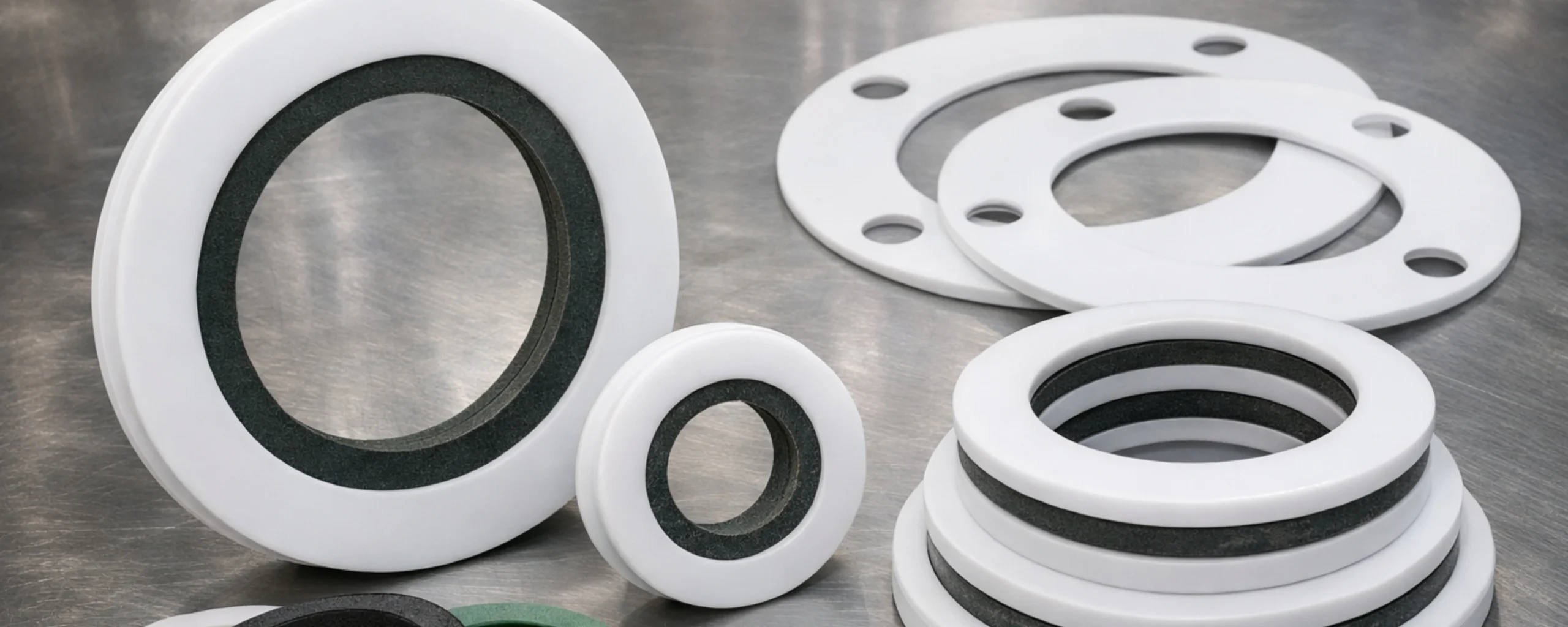
These gaskets have:
- A PTFE outer layer
- A rubber or compressed fiber core
They combine chemical resistance with mechanical strength.
Understand PTFE gasket fundamentals with What Is a PTFE Gasket and their Properties, covering material features, resistance qualities, and performance benefits for industrial sealing applications.
Advantages ofPTFE gaskets
Main benefitsof PTFE gasket material are:
Durability Long ServiceLife: Wear, corrosion, anddecay resistant.
Lower Maintenance Cost/CostSaving: Lower frequency ofreplacement compared with conventional gasket materials.
Prevents Leaking: Givesyou a reliable seal, even in severe conditions.
Broad Spectrum of ChemicalCompatibility: Applicable to all, except for afew industrial chemicals.
Excellent Thermal Stability: Performs well in both high and low temperatures.
Suitable for Delicate Processes andApplications: Employed inthe food, pharmaceutical, and medical sectors.
PTFE Gasket vs Other Gasket Materials
Let’s compare PTFE with other common gasket materials:
|
Feature |
PTFE Gasket |
Rubber Gasket |
Metal Gasket |
|
Chemical Resistance |
Excellent |
Moderate |
Limited |
|
Temperature Range |
Very High |
Moderate |
High |
|
Flexibility |
Good |
Excellent |
Low |
|
Corrosion Resistance |
Excellent |
Moderate |
Low |
|
Maintenance |
Low |
Medium |
High |
Typical IssuesAddressed by PTFE Gaskets
PTFE Gaskets serve to prevent:
- Leakage ofChemicals
- Corrosionof the flange
- High temperatureseal failure
- Contamination in food processing
- Thegasket must be replaced frequently
With these advantages, they areextensively used in vital industrial plants.
Learn essential steps for proper PTFE gasket installation with How to Correctly Install a PTFE Gasket, ensuring reliable sealing performance, reduced leaks, and longer service life in industrial applications.
Conclusion
PTFE gaskets are among the most adaptableand dependable sealing repair options to be found today. Their good chemical resistance, high temperatureresistance, and inertness make them applicable for high-end industrial applications. Chemical plants, oil refineries, food processing, and pharmaceutical units, the applications ofPTFE gaskets are many and crucial for safe, leakproof working.
For high-quality PTFE gasket products and industrial polymer solutions, Goa Polymer offers reliable manufacturing expertise and customized sealing solutions. With a focus on precision, quality materials, and industry standards, Goa Polymer provides dependable PTFE gasket solutions designed to meet diverse industrial requirements.