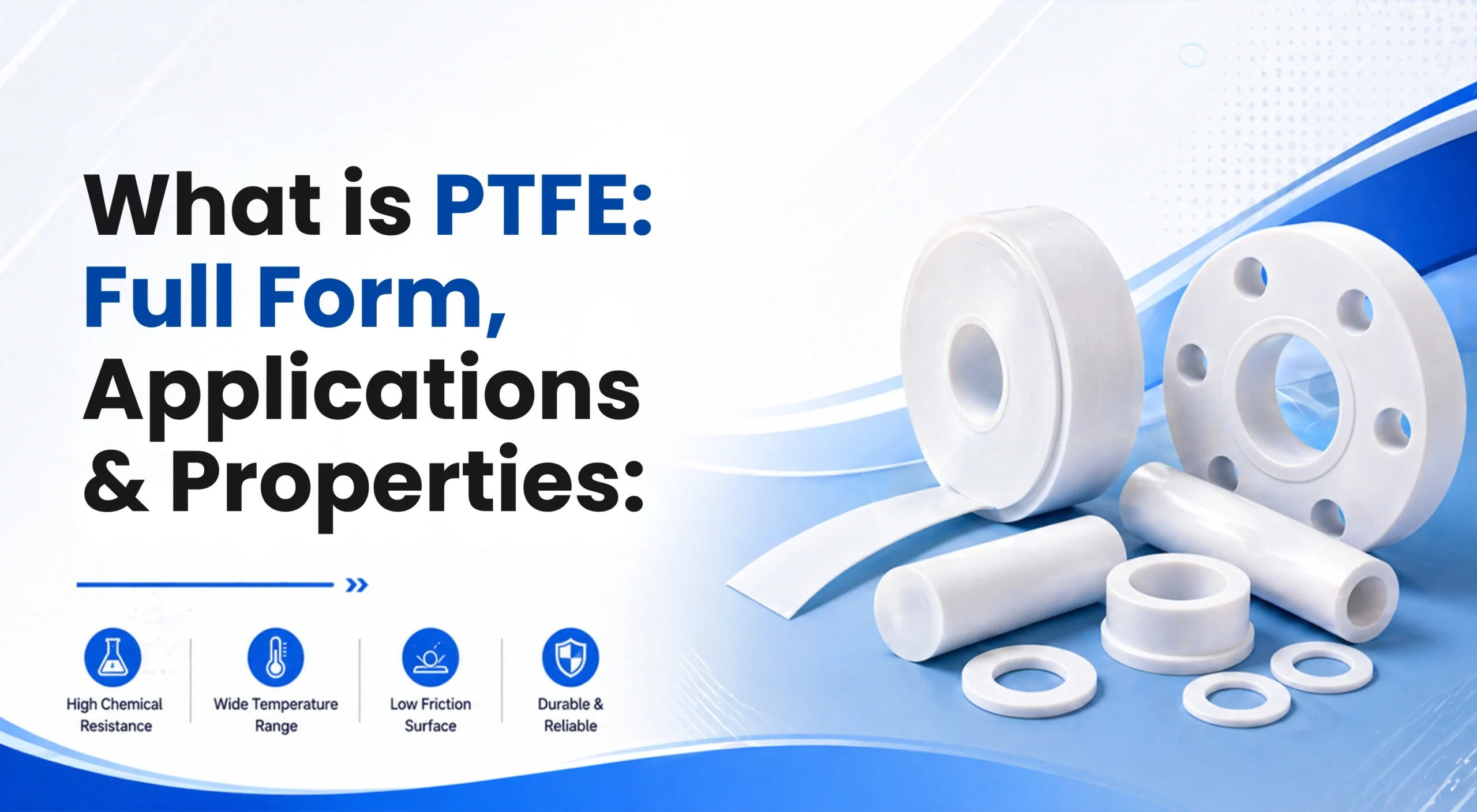
PTFE is a widely used synthetic material in modern industries, known for its non-stick and heat-resistant properties. From everyday kitchen cookware to high-performance industrial machinery, PTFE plays a crucial role in daily life.
Because of its low friction, chemical resistance, and thermal stability, it is a critical material in many industries, including electronics, automotive, medical, and manufacturing. End users don’t see much of PTFE, yet it enables these products and many others to perform better, safer, longer, and helps power advanced technologies as well.
What Does PTFE Stand For?
PTFE stands for Polytetrafluoroethylene, which is a synthetic high-performance polymer composed of carbon and fluorine. It is better known under the brand name Teflon, which penetrated non-stick cookware and industrial coatings. PTFE has a unique molecular structure, which makes it extremely tough and able to withstand extreme environments.
Why is PTFE Important?
PTFE is so highly valued because of the rare combination of attributes it exhibits that it finds utility in so many applications:
- A non-stick surface that prevents adhesion of the materials to be processed.
- It can be used in extremely hot environments as it is highly resistant to heat.
- High chemical resistance and inertness, resistant to most chemicals and reactions.
These properties make PTFE an excellent choice for products in the cookware, aerospace, electronics, automotive, and chemical processing industries, where performance and reliability are critical.
PTFE is widely used in sealing solutions. Learn more about its role in industries by reading our guide on uses of PTFE gaskets in industrial applications.
Key Properties of PTFE Material
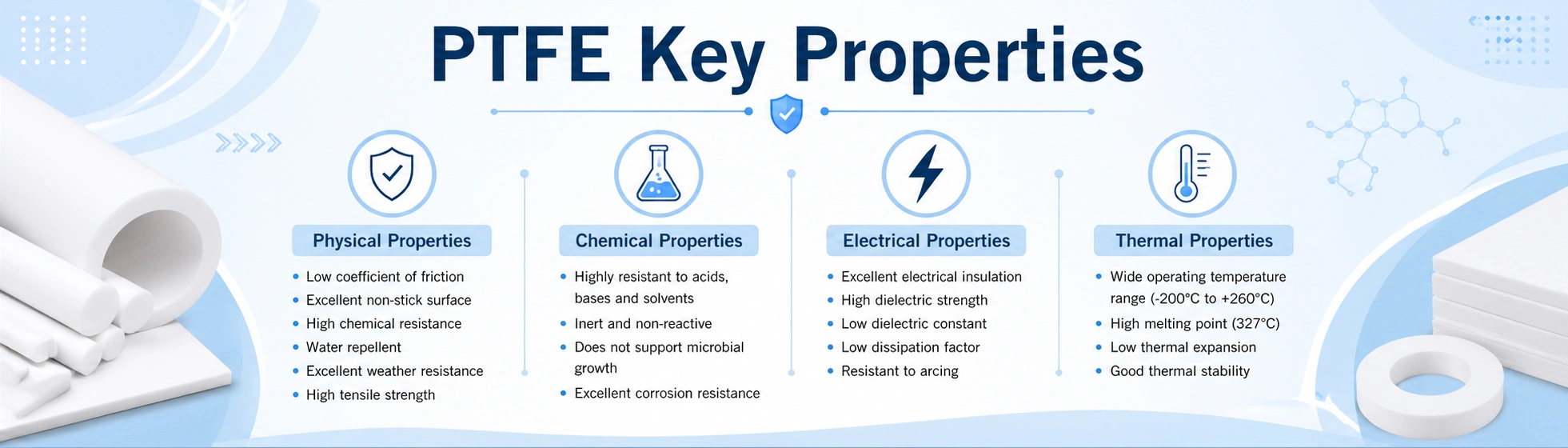
PTFE is recognized for the unusual combination of properties that are often sought but rarely matched in high-performance materials. Its unique structure enables it to work well even in extreme conditions where many other materials fail. That’s why PTFE is used so extensively in those industries where durability, reliability, and high performance are a must.
1. Physical Properties
PTFE has excellent properties that allow it to be used in many everyday products and on an industrial scale:
- Very low friction coefficient, among the most slippery materials known
- Nonstick surface from which materials can be easily removed
- Lightweight and strong
- Smooth, wax-like solution texture with excellent gloss
2. Chemical Properties
PTFE has outstanding resistance to chemical reactions and can be used in aggressive media, where other materials would be attacked. Its strong carbon-fluorine bonds give it exceptional stability and long-lasting performance even in aggressive environments.
- Resistant to acids, bases, and solvents to a great extent.
- Non-reactive with most chemicals.
- Good corrosion resistance even in a severe industrial environment.
These characteristics enable PTFE to be a material of choice in chemical plants, the pharmaceutical industry, and in many more applications where safety and long life are vital.
3. Electrical Properties
Because of its good insulating properties, PTFE is also used in electrical and electronic applications that require high safety and effectiveness. Under an adverse environment, it can still maintain electrical property stability.
- Excellent electrical insulation to prevent leakage currents
- High dielectric strength enables high electric fields
- Good performance at high voltage and high frequency
These properties make PTFE a good material for wire insulation, cable jacketing, and electronic components where reliability is essential.
4. Thermal Properties
PTFE is an outstanding performer in hot and cold environments and can be used for both high-temperature and lower-temperature applications. Its thermal stability provides reliable performance also in harsh environments.
- Up to 260°C operating temperature
- Thermally stable even during prolonged heating
- Stable in both hot and cold conditions of application
These thermal properties make PTFE ideal for use in industries, for example, in aerospace, electronics, and chemical industries, where materials frequently come in contact with extremely high or low temperatures.
Choosing the right material matters. Compare performance, durability, and applications in our detailed guide on PTFE vs bronze bush differences.
Applications of PTFE in Different Industries
Because of its versatility, performance, durability, and extreme condition resistance, PTFE is applied in many fields. Its exceptional non-stick, heat-resistant, and chemically resistant properties enable its use in numerous applications.
1. Industrial Applications
In industrial use, PTFE is popular and well-utilized with many applications due to the polymer being able to withstand extreme heat and cold, and being resistant to chemical attack. This long-lasting performance and reliability can be guaranteed even in the most demanding applications.
- Pipes and tubing systems for the safe transport of corrosive chemicals
- Gaskets, seals, and valves that join together cleanly and securely
- Bearings and bushings that minimize friction, wear, and maintenance
As a result of its strength, low friction, and exceptional resistance to chemical degradation, PTFE is often regarded as the best option for harsh industrial environments where safety and effectiveness are paramount.
2. Electrical & Electronics
PTFE is an essential component of electrical systems as its insulating properties and stability in extreme conditions are far superior to those of other materials. It guarantees safety, efficiency, and durability in sensitive applications.
- Insulation of wire and cable to reduce current leakage.
- Coating for electronic parts to improve resistance.
- High-frequency circuit boards for stable transmission.
Its high voltage and temperature performance also make it indispensable in today’s electronics.
3. Medical Industry Uses
In medicine, the biocompatibility and inertness of PTFE render it safe to use within the human body.
- Surgical implants, employed in various operations,
- Catheters and tubing are used in medicine to convey fluids
- Vascular grafts for the repair of blood vessels
Such uses demonstrate the dependability of PTFE in high-medical situations.
4. Household Applications
Convenience and performance are the main reasons behind the popularity of PTFE in household products.
- Nonstick cookware that makes cooking and cleaning easier
- Iron or other base coatings for smooth gliding on fabrics
- Water repellent and stain-resistant materials
These applications contribute to the significance of PTFE material in enhancing the quality of life and comfort in daily life.
For better performance in machinery, explore our detailed article on benefits of PTFE (Teflon) bushes in industrial use and how they reduce friction and wear.
Advantages and Disadvantages of PTFE
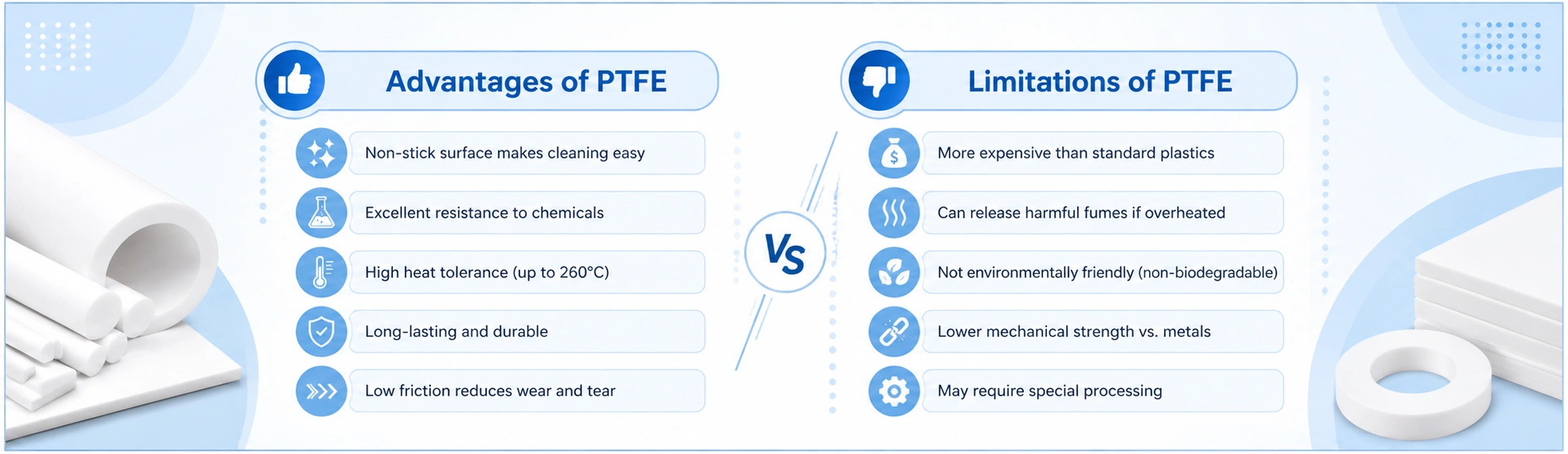
Like any material, PTFE has both benefits and limitations. Understanding these can help you decide whether it is the right choice for your specific application.
How to Choose the Right PTFE Product
Selecting the suitable PTFE product depends on your unique requirements and the conditions of use. As PTFE is used in various industrial applications, having the right type can provide superior value, safety, and long-lasting benefits.
Factors to Consider
Before purchasing a PTFE product, consider these essential aspects:
- Operating temperature range: Each material has limitations on how much heat it can be exposed to without starting to break down
- Chemical Exposure: Select PTFE grades that are resistant to particular acids, solvents, or corrosive chemicals
- Application type: Is the application industrial, electrical, medical, or domestic
- Required durability: Consider mechanical strength, wear resistance, and lifespan
Buying Tips
For a wise and budget-friendly purchase, keep these tips in mind:
- Select only certified and tested products to ensure reliability and trust.
- Prefer trusted brands, which will give you the best results.
- Carefully review technical specifications and material grades
- Quality, features, and price comparison before you purchase the product.
The right PTFE product choice can increase your productivity while lowering your maintenance costs and ultimately allowing your company to enjoy greater profits.
Conclusion
PTFE (Polytetrafluoroethylene) is a highly versatile, high-performance material known for its non-stick, heat-resistant, and chemical-resistant properties. From everyday household products to advanced industrial and medical applications, PTFE plays a crucial role in improving efficiency, durability, and safety across industries.
Choosing the right PTFE solution is essential, especially for applications involving extreme temperatures or harsh chemical environments. Working with a reliable and experienced manufacturer ensures consistent quality, performance, and long-term value.
Goa Polymer offers ISO 9001:2015 certified PTFE products designed to meet the specific requirements of industries such as automotive, chemical processing, electronics, and food & beverage. With a strong focus on quality, customization, and performance, the company delivers dependable solutions for both standard and specialized applications.